The Delta Online Publishers Forum (DOPF) today commemorates the 2026 World Press Freedom Day with focus on the invaluable role of journalism in conflict prevention and peace building.
The event held on 6th May 2026 at DOPF Secretariat, Asaba and brought together critical stakeholders in the information and media subsector in Delta State.
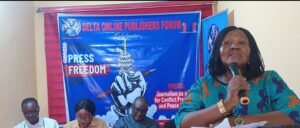
In a goodwill message, the State Director of National Orientation Agency (NOA), . Delta State, Comrade Mrs. Tracy Ikolomi, expressed profound appreciation to the leadership of DOPF for their sustained partnership with NOA. She deemed the theme of this year’s edition of press freedom day as apt, noting that without peace and serenity, we cannot have a safe society. She emphasized the importance of journalists, including the so-called “citizen journalists” in unravelling credible news, citing the recent cases of crime in Delta which was covered by the conventional social media.
Ikolomi ceased the opportunity to hail the growth of DOPF in strength and networks, urging them to continue in the path of progressive growth.

The guest speaker of the event, Dr. Gideon Udechukwu Isika, an Authority in Political Communication and Development Strategic Media, and Associate Professor of Mass Communication in Dennis Osadebey University, Asaba, emphasized on responsible journalism in times of conflict to engender peace in the society.
Isika noted that conflict defines and limits the social condition in which we live, and deeply affects emotions and interest. He further noted that the topic of this year’s edition is apt, given a Nigerian democracy bedeviled with social conflict and insecurity. He however posited that journalists have all it takes as a veritable tool for shaping the society towards the right direction.
“The task before this conference is to find the nexus between factual reporting and societal challenges if the aim of reducing social conflict and competition which is optimizing progress can be realized.”, Isika stated.
The University Don further emphasized that conflict with its associated squabbles and tensions is not entirely bad as it could lead to startling revelations and good outcomes, and this is where responsible and factual journalism is required.
:
He further itemized the Notion of Journalistic Principles: which includes respect for truth, the principles of freedom in reporting, factual reporting, not suppressing essential information or falsifying documents, rectify any published information which is found to be harmfully inaccurate,. amongst others. The scholar further cautioned journalists about grave professional offences like plagiarism; malicious representations; calumny, slander, libel, and unfounded accusations.
On professional integrity, Isika noted that this is the cornerstone of a journalist’s credibility, and charged journalists to uphold this tenet, avoiding sedition and deliberate distortion, and subscribing to balanced reporting.
Criticising what he described as begging-bowl journalism and the tendency to package political office holders, Dr Isika urged practitioners to act as watchdogs rather than lapdogs of those in power.
Isika cautioned journalists to be careful as election draws closer, so as not to be used as tools to cause crises instead of peace building. “Journalists must resist pseudo-reality, reject manipulation, and refuse to sacrifice truth for personal gain or political convenience,” he said.
As journalists we must adhere strictly to global ethical standards, that includes accuracy, fairness, balance, and respect for diversity, while avoiding discrimination and inflammatory reporting that could escalate tensions.” “We must use our medium to promote dialogue, emphasise shared national values, and encourage and facilitate constructive conversations through talk shows, press engagements, and community forums aimed at reducing tensions.” He said.
“I’m optimistic that projecting the principles of journalism is the way to go and with everyone here acting in good conscience, the course of national rebirth can be a possibility.”: Isika concluded .
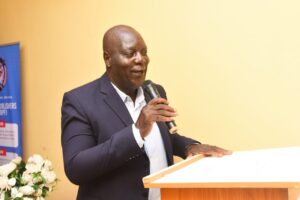
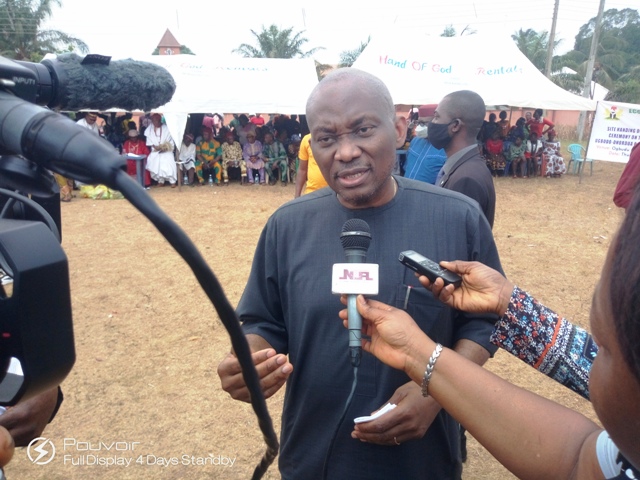
The event was also graced by Comrade Felix Ofou as Special Guest of Honor. Ofou, who is an Executive Assistant to Delta State Governor on News Media and Director Cruze FM, emphasized on financial independence as a proponent of responsible journalism.
“You cannot be a successful journalist if you are not financially independent”: Ofou stated, while recounting the dangers in journalism with reference to his experience in the Okotoko crisis.
Ofou, who’ was the former Chairman of the defunct Punch Chapel of the NUJ, and Human Rights Award winner of the NUJ National Body (Imo State Chapter), charged journalists to imbibe credibility professionalism and regulations in their practices, and engage in continuous training and development for professionalism, aspiring to be not only a journalist but have a medium.
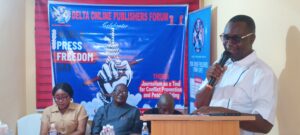
In a goodwill message, the Director-General of Delta State Bureau for Information, Dr. Fred Latimore Esq. expressed appreciation to the Chairman and leadership of DOPF for organizing this memorable event.
He charged journalists to keep reading and studying for more certifications, while soliciting the support of DOPF as election draws closer in news dissemination for a successful election.
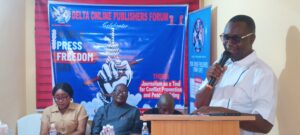 The State Chairman of Nigeria Union of Journalists (NUJ), Delta State Chapter, Comrade Churchill Oyowe, in his goodwill message, emphasized on creativity and responsibility for balanced reportage.
“Before journalists are entitled to social and economic security, they should play their parts through responsible journalism that makes us citizenship journalists, different from citizen journalists.” Oyowe noted.
He further noted that there is need for a 4-way test, verification and fact-checking for balanced reportage, and urged journalists to be guided by these due diligence. He mentioned that the Journalism Council of Nigeria is a necessary institution for the stability of journalism which will regulate journalists from the onset in tertiary institutions. He urged members to be up and doing to make the profession a noble one.
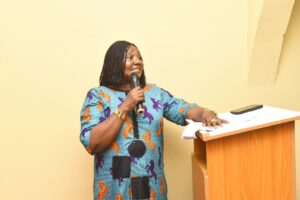
Speaking at the event is the Chairperson of Nigeria Association of Women Journalists (NAWOJ), Delta State Chapter, Comrade Sonia Unobunjo, who commended DOPF for convening the program on behalf of the entire Press family in Delta State.
She applauded DOPF for doing journalism and doing it very well, while encouraging credible and responsible publications in online publishing.
Unobunjo identified the role of NAWOJ as being supportive to other organs of NUJ in Delta State, and assured the DOPF of their continued support in programmes like this.
Earlier in the programme, the Chairman Organizing Committee, Comrade Julius Oweh noted that DOPF was established and operates on the principle of professionalism and responsible journalism for peace building as he set the course of the discussion.
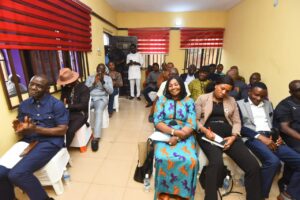
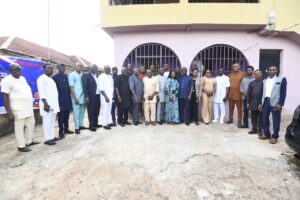
Participants present raised concern on plethora of issues which includes failure of accessing credible source of news and accessing areas with heavy security presence, the snare of paymasters in journalism, citizen journalism, balanced reporting, fear of the internal sabotage or power fighting back.
Responding, Dr Isika noted that reporting truth has a lot of danger, but charged journalists to be of good courage and hope in God while being very careful in their practices.
On citizen journalism, DOPF Chairman, Comrade Emmanuel Enebeli clarified that DOPF members are registered journalists with registered media outfits for public accountability. He decried cases of citizen journalists and Facebook boys who have no media background but are engaged by the political class as their media aides, but emphasized that the requisite qualifications should be met before appointment as public aides.

In a vote of thanks, Enebeli extended the Forum’s profound gratitude to guests present for the event, and acknowledged DOPF responsibility as gatekeepers for public trust. “As we approach election, the burden of journalism becomes greater with a need to ensuring that our platforms serve for peace instead of unrest.” he said.
He assured stakeholders that DOPF advocates ethical reportage and publications to prevent crises through strategic communication with the Government and responsible publications to the public.