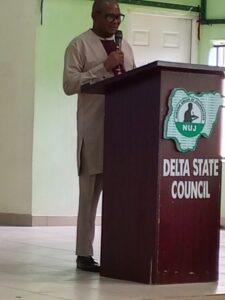
A retired DMG of Delta Broadcasting Service, Asaba, Mr Benjamin Binitie, has cautioned and called on journalists to shun emotional reporting from social media and build corporate relationship with oil and gas companies in order to get credibly and reliable information from the right source
He made this call during a one-day capacity building programme organized for journalists by the Nigeria Union of Journalists (NUJ), Delta State Council, in partnership with Chevron Nigeria Limited, on promoting ethical standards in oil and gas reporting.
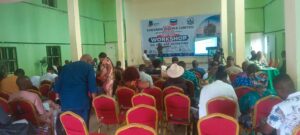
The training titled “Enhancing Professional Skills and Ethical Standards in Oil and Gas Journalism.”took place at the NUJ Press Center, Asaba, and brought together finest facilitators and lecturers in news reporting, with 50 participants trained in oil and gas reporting.
He noted that one of the peculiarities in oil and gas industry relative to host communities is crisis, and report of such crisis should be done credibly and responsibly to avoid creating fear, confusion or even violence.
He cited some unfounded reports in Nigeria that triggered and snowballed into violence or even fatalities like that of the Ogoni 7 in Niger Delta region,.and warned against unfounded and emotional reporting that could trigger sentiments and generate violence in oil region.
Binitie stated.that for a communication to be responsible during crisis, it must be timely, coordinated and accurate. “Emergencies in oil and gas, whatever form they take, require specific reporting strategies”, Binitie noted, adding that the proper line of action for responsible communication of emergencies are; stating nature of emergency, cause of emergency, communities impacted and specific number of casualties, regulators’ action, and response measure by the company.
He strongly condemned emotional reporting, adding that unconfirmed figures, fake pictures and videos have proliferated the social media space, thus should be the last source of information for a journalists.

In a goodwill message, the General Manager of Chevron Nigeria Limited, Corporate Affairs, Mr Olusoga Oduselu, represented by the Manager, Communication for Nigeria and Mid-Africa, Dr Victor Anyaegbudike, noted that the oil and gas industry is very sensitive and therefore those reporting it’s activities must do it responsibly and credibly, adding that this is the thrust for the capacity building training organized for journalists.
Speaking further,, Anyaegbudike termed journalists as “Agender Setters”, informing what people think or say and shaping broader opinion and perception. He noted that training of journalists is one of the best practices of Chevron with 425 journalists being trained and an estimated 1billion dollars spent annually for Nigeria’s Content Development.
He assured that the oil company remains committed to building journalists’ capacity in oil and gas reporting, while promoting ethical standards and discipline in reporting.
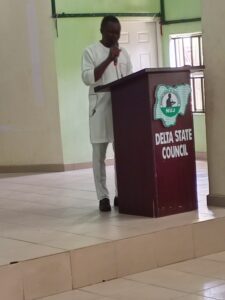
Earlier in the programme, the Chairman of NUJ Delta State Council, Comrade Churchill Oyowe, described the workshop as timely, given the importance of the oil and gas sector to Nigeria’s economy, energy security and development maps
Oyowe noted that oil and gas reporting requires understandimg of the industry’s value chain, the regulating laws and it’s operations with host communities.
He reiterated that the aim of the training is to build capacity in journalists on producing reports that are both informative and responsible, adding that NUJ Delta State Council remains committed to continuous training and retraining of it’s members for effective and responsible journalism.
He urged participants to uphold accuracy, fairness and professional ethics, while commending Chevron for its continued support for media capacity development.
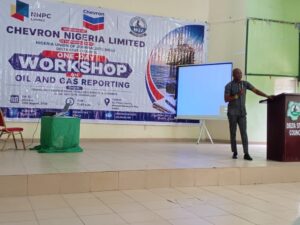
The workshop featured insightful lectures by seasoned media professionals and academics on communicating oil and gas company’s activities, ethical reporting, health, safety and environmental standards, clean energy, the Petroleum Industry Act and host community relations.
A Q/A session saw a spectrum of concern’s about the journalist’s safety,. insurance and welfare.being addressed as well as professional reporting detached from inducement or gratification.
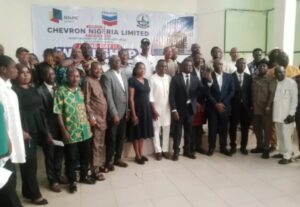
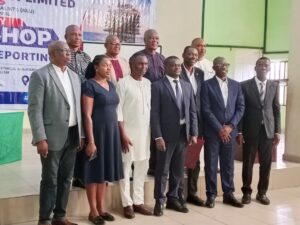
Highpoints of the training were lectures, question and answer, presentation of certificates/awards and group photographs.