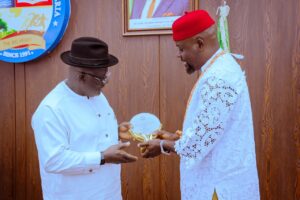
The apex socio-cultural organization of Ndokwa Nation, Ndokwa Neku Union (NNU), Tuesday passed a vote of implicit confidence in Delta State Governor, Rt. Hon. Sheriff Oborevwori, for his inclusive, equitable, exemplary and development-driven leadership.
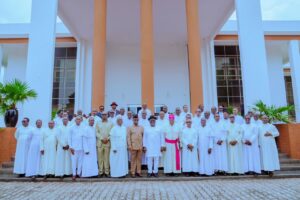
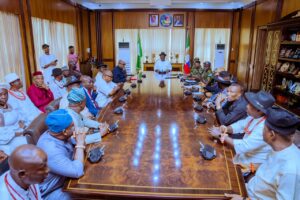
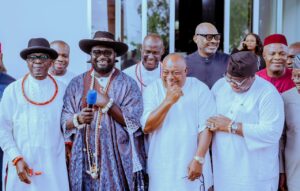
The vote of confidence came during a courtesy visit by the leadership of NNU, elders and stakeholders of Ndokwa Nation to the Governor at Government House, Asaba, where the delegation praised his administration’s commitment to fairness, accessibility and infrastructural development across Delta State.
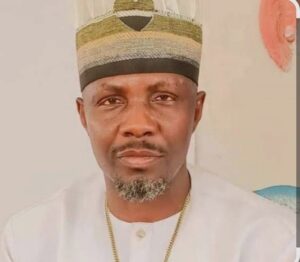
Speaking on behalf of the delegation, President-General of NNU, Chief Amaechi Asugwuni, said the visit was aimed at appreciating the Governor for his numerous interventions in Ndokwa land and across the state.
According to him, the Ndokwa people had continued to enjoy the Governor’s goodwill, respect and commitment to equitable development, noting that his administration had provided ample evidence of purposeful governance.
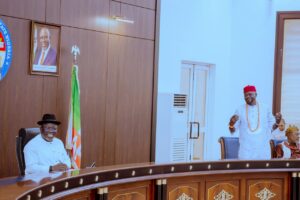
He specifically lauded the completion and handover of Ndokwa House, describing it as a landmark project that would serve as a centre for consultation, planning and collective decision-making for generations of Ndokwa people.
Asugwuni also commended the Governor for the completion of the Asaba-Kwale-Ughelli Road, saying the project had significantly improved connectivity between Asaba and Ndokwa communities while providing a strategic alternative route within the state.
He further praised Governor Oborevwori’s open-door policy, noting that requests for engagement and consultation had consistently received prompt attention.
While appreciating the governor for all his doing in the state, the Ndokwa leader raised concerns over electricity supply challenges in the area and appealed for the step down of the Okpai Independent Power Plant.
He, however, said; “as a people, we condemn in the strongest possible terms every act of vandalism directed at public infrastructure. We cannot continue to demand development while allowing few individuals to sabotage facilities meant to improve our lives”.
Asugwuni apologized for the losses occasioned by the vandalism of power facilities and assured the Governor that community leaders were strengthening local security measures to prevent future occurrences.
The NNU President-General also appealed for the siting of higher institutions and critical infrastructure projects in Ndokwa land, including key road projects aimed at boosting connectivity and economic development.
Asugwuni concluded by saying; “on behalf of the National Executive Council of Ndokwa Neku Union and the entire Ndokwa ethnic nationality, we unanimously pass a vote of confidence in Your Excellency, Rt Hon (Elder) Sheriff Oborevwori in recognition of your exemplary, inclusive and development-oriented leadership”.
Responding, Governor Oborevwori thanked the leaders and people of Ndokwa Nation for their support and confidence in his administration, assuring them of his continued commitment to the development of all parts of Delta State.
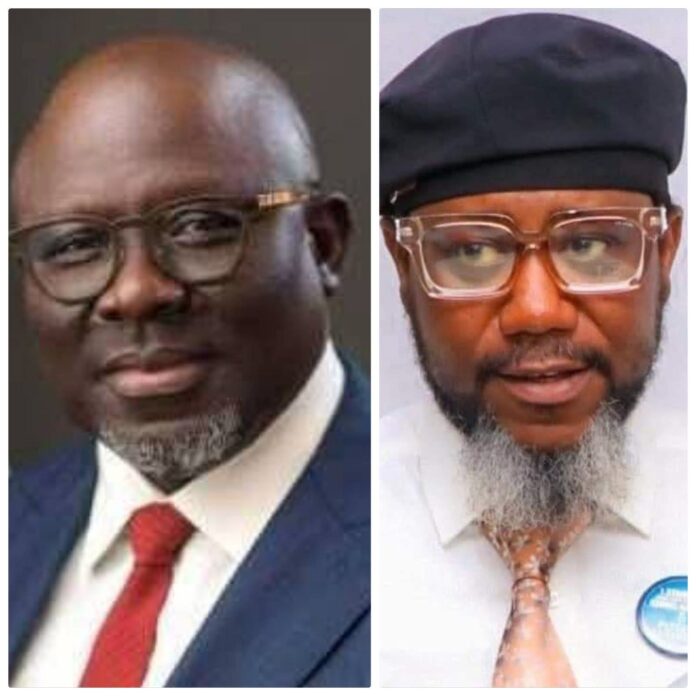
The Governor particularly commended the Deputy Governor, Sir Monday Onyeme, describing him as a dedicated and effective public servant who had continued to contribute immensely to the growth and development of the state.
He also praised the leadership qualities of the Ndokwa Neku Union President-General, describing him as articulate, passionate and committed to the progress of his people.
Addressing concerns over electricity supply, Oborevwori acknowledged the challenges facing Ndokwa communities and lamented that repeated acts of vandalism had delayed efforts to restore power to affected areas.
He disclosed that the state government had approved additional funding for ongoing electrification projects and promised that work would soon commence in the affected communities.
The Governor said the government was also engaging the Transmission Company of Nigeria and other stakeholders to address electricity challenges, while assuring that the proposed Okpai Step-Down Facility remained under consideration.
He commended the Ndokwa Nation for publicly condemning vandalism, stressing that the destruction of public infrastructure increased project costs and slowed development.
On requests for additional educational institutions, Oborevwori noted that Ndokwa Nation already hosts a federal university and urged stakeholders to focus on strengthening existing institutions.
He also assured the delegation that several road projects requested by the people had either been approved or were already under construction.
The Governor emphasized that Ndokwa people occupied strategic positions in his administration, including the offices of the Deputy Governor, Commissioner for Energy and Commissioner for Finance, assuring them that their interests remained adequately represented.
Speaking on the 2027 political landscape, Oborevwori said the prevailing political arrangement in Delta State promotes continuity, stability and inclusiveness, adding that his administration remained focused on delivering projects rather than engaging in unnecessary publicity.
He reiterated that he remained Governor for all Deltans, irrespective of ethnic affiliation.
“What I do for Ndokwa, I will do for Isoko, Ijaw, Urhobo, Anioma and every other part of the state. The evidence is visible across Delta State. Our projects are spread throughout the state. We are showing results and we are showing our work,” the Governor stated.
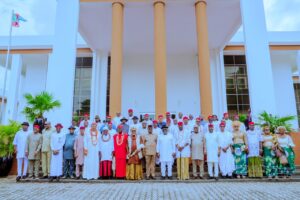
Oborevwori thanked the delegation for visiting as a united front comprising traditional rulers, lawmakers, council chairmen and political leaders, assuring them of government’s continued partnership in advancing the development, unity and prosperity of Delta State.