Delta State Governor, Rt. Hon. Sheriff Oborevwori, Tuesday declared that the state can no longer rely solely on oil revenue, urging local and foreign investors to take advantage of the vast opportunities across critical sectors of the economy as his administration intensifies efforts to diversify the state’s economic base.
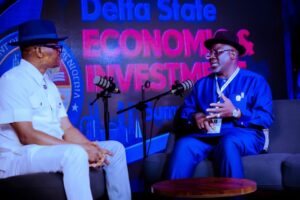
Speaking at the close of the second day of the Delta State Economic and Investment Summit 2026 in Asaba, the governor thanked all participants, local and foreign investors, saying deliberations at the summit had reinforced the urgent need to expand investments beyond the oil and gas sector to ensure sustainable economic growth, job creation and shared prosperity.
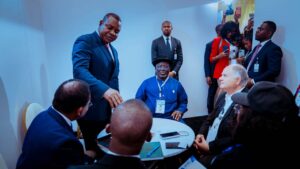
He said the business sessions on agriculture and livestock development, the energy ecosystem, the blue economy and transport infrastructure, solid minerals and mining, the digital economy and innovation, as well as the legal framework for investments, had demonstrated that Delta State possesses enormous untapped investment opportunities capable of transforming its economy.
“We can no longer depend on one source of revenue. We must diversify our economy by attracting strategic investments into sectors where Delta State has a clear comparative advantage. That is the pathway to creating jobs, growing businesses and improving the quality of life of our people,” Oborevwori said.
The governor explained that the summit was deliberately designed as a private sector-driven initiative rather than a government-centred event, stressing that its primary objective was to connect investors with viable business opportunities capable of delivering sustainable returns.
According to him, the state government’s role is to create an enabling environment for businesses to thrive through supportive policies, improved infrastructure, security and strategic partnerships with the private sector.
He disclosed that the state had already secured land and put other critical measures in place to encourage investments across key sectors of the economy, adding that investment roadshows had been undertaken to countries such as China and Brazil to showcase Delta’s economic potential.
Describing the summit as more than a policy dialogue, he said it had become a practical platform for connecting investors with bankable opportunities and translating investment interests into concrete projects.
He maintained that the summit was not a mere “talk show” but a strategic platform backed by serious investors already on ground, reaffirming his administration’s commitment to creating a business-friendly environment by strengthening infrastructure, guaranteeing policy consistency, promoting security and fostering stronger partnerships with the private sector.
The governor expressed optimism that the ideas, partnerships and commitments emerging from the summit would culminate in tangible investments capable of accelerating industrialisation, expanding employment opportunities and positioning Delta State as one of Nigeria’s leading investment destinations.
Earlier during the panel sessions, experts identified agriculture, livestock, mining, blue economy and legal reforms as critical sectors for attracting sustainable investments.
Speaking during the agriculture, agribusiness and agro-industry session, former South-South Vice President of the Poultry Association of Nigeria (PAN), Chief Eta Enahoro, urged the state government to prioritise investments in fish and poultry production, saying both sectors possess enormous capacity to create jobs, reduce unemployment and transform Delta into a leading agribusiness hub.
He noted that many young people seeking political appointments could become successful entrepreneurs if adequately supported to establish poultry and fish farms.
Also speaking, Brazilian agribusiness investor, Roberto Fonseca, unveiled plans to partner the Delta State Government to develop a modern cattle and beef value chain, covering cattle breeding, ranching, slaughterhouses, beef processing, cold storage, refrigerated transportation and distribution networks.
Fonseca said Delta possesses climatic and environmental conditions similar to those that enabled Brazil to become the world’s largest cattle and beef producer, adding that the partnership could position the state as a major livestock production hub for Nigeria and neighbouring African markets.
On the blue economy and transport infrastructure, Dr. Uche Igwe called on the state government to tackle illegal and unregulated fishing activities to maximise the economic potential of its waterways.
Mosra Energy Managing Director, Ramos Olukayode, said Delta State has over 200 million tonnes of coal deposits in Obomkpa, Ugbodu and Ukunzu, exceeding the estimated reserves in Enugu and Kogi states. He described the deposits as a major asset for the state’s industrialisation drive.
He disclosed plans to build a 600-megawatt power plant at Obomkpa, with over 200 hectares already secured for the project, adding that the area also has abundant kaolin and clay deposits to support manufacturing activities at the proposed industrial hub.