Home Blog

VDM: The Face of a Missing Link….. Why Nigerians are increasingly turning to influencers when institutions fail to listen

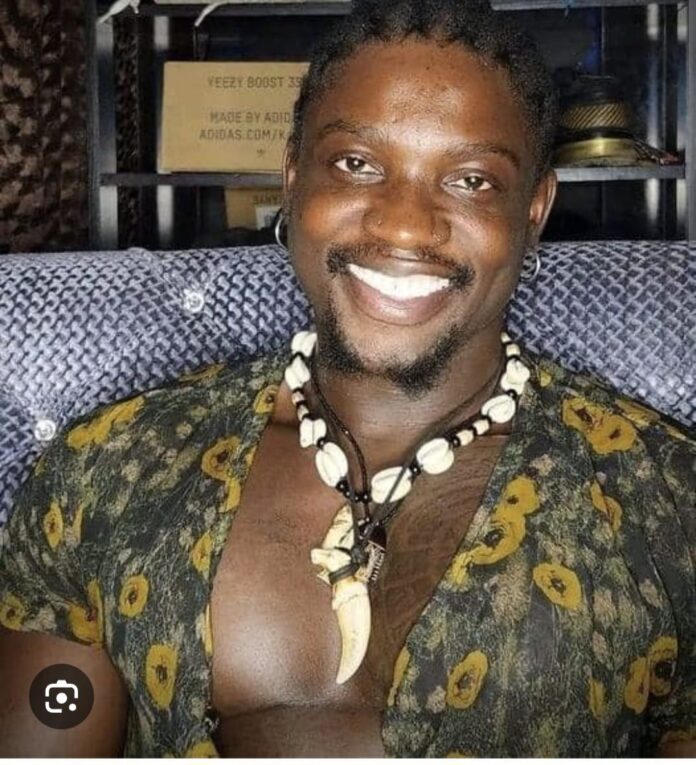
Very Dark Man

By Moses E. Akhimienmhonan

The controversy surrounding the invitation of Martins Vincent Otse, popularly known as VeryDarkMan (VDM), to speak at the recent Annual General Conference of the Nigerian Bar Association (NBA) in Port Harcourt has generated considerable debate.

Was he the appropriate choice for a professional gathering of lawyers? Did his background and public persona fit the expectations of an NBA conference? Were the concerns raised about his invitation justified?

These are legitimate questions.

But there is another question, perhaps more important, that the controversy seems to have pushed into the background:

Why has Nigeria created a space in which a man with a smartphone and a social-media platform can command the attention and confidence that many established institutions appear to be struggling to retain?

For me, that is the real story.

VDM did not create the vacuum. He found himself standing in it.

When citizens look elsewhere

Over the past few years, VDM has become an unusual phenomenon in Nigeria.

To some Nigerians who feel powerless, ignored or shut out by established institutions, he has become another door to knock on when other doors appear closed.

When people have problems that ordinarily should be taken to the police, some now take them to VDM. When someone believes he has been cheated but cannot afford a prolonged legal battle, social media sometimes becomes the first avenue of appeal. When violent attacks, kidnappings or killings occur, VDM is often among those drawing public attention to the victims and demanding answers.

When someone feels oppressed or ignored by an institution, it is increasingly common to see the person make a video and direct an appeal to him.

Time and again, he has brought attention to cases that might otherwise have disappeared quietly.

That does not mean that everything VDM says or does should be accepted as correct. It certainly does not mean that social media should replace the police, the courts or other legally constituted institutions.

Far from it.

But the phenomenon itself deserves serious examination.

Why are people listening to him?

The Ahoada school project

My reflection on this question deepened recently when I came across a video of VDM inspecting a school project in Ahoada, Rivers State.

The project is being financed by Nigerian music star Burna Boy, who, according to the account surrounding the project, entrusted VDM with overseeing its execution.

Ahoada West Local Government Area is the ancestral home of Burna Boy, and the project appears to be a significant intervention intended to provide educational infrastructure for the community.

VDM was seen walking through the developing facility, taking his followers from one section of the project to another.

There were classrooms, toilets, a clinic, a football field and other facilities under construction.

He explained aspects of the work and discussed how funds were being applied.

I was struck by the apparent emphasis on visibility and accountability.

But another thought immediately followed:

Why should a project intended for the public good require an individual social-media personality to become its public face of accountability?

And that question leads to an even bigger one.

What has happened to the institutions that should ordinarily provide such facilities and guarantee accountability in the first place?

The project therefore presents two contrasting realities.

On one hand, it demonstrates what individuals can achieve when they decide to deploy their resources and influence for the public good.

On the other, it exposes the gaps that emerge when government institutions fail, or are perceived to have failed, to fulfil responsibilities expected of them.

Why VDM?

I also found myself asking another question:

Why did Burna Boy choose VDM?

I cannot speak for the musician, and I do not know all the considerations behind his decision.

But the answer may have something to do with trust, availability and the perception that VDM would remain visibly engaged with the project and publicly account for its progress.

That choice is significant.

It suggests that VDM’s influence may no longer be confined to social-media advocacy or public confrontation.

He is increasingly occupying a space between people who need help and individuals who have resources but are looking for someone they trust to act.

That is precisely what makes his rise worth studying.

The missing link

Nigeria has no shortage of institutions.

We have the police. We have courts, lawyers and judges. We have regulatory agencies, elected representatives, ministries and commissions.

We have some of the finest professionals and most accomplished intellectuals on the continent.

Yet an increasing number of Nigerians appear to believe that one man with a phone and a social-media platform may give them a better chance of being heard than some of the institutions formally established to protect their rights.

That contradiction should concern all of us.

VDM appears to have occupied the space between the citizen and the institution.

He has become, for some people, a missing link between a complaint and the possibility of being heard.

And that is not necessarily a compliment to VDM.

It is, in many respects, an indictment of the system.

Expertise without courage

This phenomenon also raises questions about expertise and public responsibility.

Nigeria has no shortage of educated and highly accomplished professionals. But expertise alone does not guarantee that institutions will act courageously, fairly or independently.

Knowledge becomes most valuable when it is accompanied by the willingness to deploy it in defence of justice and the public interest.

This is where expertise intersects with power.

Public confidence is shaped not only by what professionals know, but also by how freely they are able to exercise their judgement when doing so brings them into conflict with powerful interests.

Over time, some individuals who were once celebrated for speaking truth to power have moved closer to the institutions and actors they once criticised.

Such transitions are not necessarily evidence that principles have been abandoned. Proximity to power can sometimes provide greater opportunities to influence change.

But it can also make sustained criticism more difficult.

The deeper question is therefore this:

How much of the independence that made a public voice distinctive can survive when that voice moves closer to power?

The lawyers who allegedly agree privately

One of VDM’s claims after the NBA conference particularly caught my attention.

In a video clip, he said that some lawyers approached him privately to express support for views he had raised publicly. According to him, they told him they would have liked to express similar views themselves but felt constrained by their profession.

I have not independently verified that claim.

But if it is accurate, it raises a profound question about professional culture.

What happens when people acknowledge a problem privately but are reluctant to confront it publicly?

At what point can concern for the dignity of a profession become an obstacle to acknowledging its shortcomings?

And what should the dignity of a profession ultimately mean if ordinary people are gradually losing confidence in the institutions associated with it?

These are uncomfortable questions, but they are questions worth asking.

Falana and the VDM controversy

This brings me to another dimension of the controversy.

Femi Falana, SAN, has for decades been one of Nigeria’s most prominent voices on human rights, civil liberties and public accountability.

His record of confronting injustice gives his interventions considerable weight.

It is therefore understandable that his criticism of VDM’s invitation to the NBA conference attracted attention.

Falana questioned the wisdom of inviting “somebody from nowhere” to such a professional gathering.

The argument about expertise is understandable. Professional bodies have every right to consider the competence, experience and suitability of speakers invited to their conferences.

But the expression “somebody from nowhere” also raises another question:

Where exactly is nowhere?

By what measure do we decide who counts as “somebody” in Nigeria?

Is recognition determined by professional qualifications, titles, political connections, wealth, family background, polished English or acceptance by the establishment?

Or can public relevance also emerge from the trust an individual earns among ordinary citizens?

I believe that is the question beneath the controversy.

Falana and VDM may have more in common than it appears

Interestingly, Falana and VDM may not be as far apart as the present disagreement suggests.

They belong to different generations and operate in very different ways.

One is a highly respected Senior Advocate of Nigeria with decades of legal and human-rights activism behind him. The other is a social-media personality who has built his influence through direct communication with the public.

Their methods are different.

Their language is different.

Their platforms are different.

But both, in different periods and in different ways, have occupied a space created when citizens lose confidence in formal institutions.

For years, Falana himself became one of the voices Nigerians turned to when they believed established institutions were unwilling or unable to confront powerful interests.

That is why the broader lesson may not be about choosing between Falana and VDM.

It should instead be about asking why Nigerians continue to need people like them in the first place.

Where institutions work effectively, citizens should not have to search for a Falana, a VDM, a courageous journalist or a generous philanthropist before they can be heard.

The danger of replacing institutions with personalities

There is, however, a danger in celebrating personalities too much.

No society can sustainably depend on exceptional individuals.

Individuals are temporary. They can make mistakes. Their circumstances can change. Their loyalties can shift. Even those who begin with the best intentions can eventually become compromised.

Institutions, at their best, are designed to provide continuity beyond personalities.

Justice should not depend on whether a particular influencer is interested in a case.

Police accountability should not depend on whether a particular activist picks up his phone.

Public infrastructure should not depend solely on whether a celebrity chooses to intervene.

Electoral justice should not depend on the influence of individual personalities.

The ultimate goal should therefore be to build institutions strong enough that exceptional individuals become complements to the system rather than substitutes for it.

The judiciary and the wider crisis of confidence

The same concern extends to Nigeria’s electoral and judicial systems.

There is already growing discussion among some opposition political actors about the usefulness or effectiveness of post-election litigation following the 2027 elections.

Whether that ultimately develops into a formal or collective position remains to be seen.

But the very possibility deserves attention.

The courts are supposed to provide a final avenue of redress when electoral processes are disputed.

Therefore, whenever political actors begin speaking as though that avenue may no longer offer sufficient hope, the issue should not simply be dismissed as partisan rhetoric.

The more important question is:

What has brought them to that conclusion?

The issue goes beyond any particular political party or election.

It speaks to public confidence in the judiciary as a credible and dependable mechanism for resolving disputes.

And once confidence in the formal avenue of redress begins to decline, another question inevitably follows:

What is the alternative?

The man without a wig

VDM has no wig.

He has no gown.

He has no SAN after his name.

He holds no political office.

He may lack the polished language and professional pedigree of many people who sat in that conference hall.

Yet he possesses something that some Nigerian institutions are struggling to recover:

the attention and trust of a significant number of ordinary Nigerians.

That trust does not make him infallible.

It does not make him a substitute for lawyers, judges, police officers, regulators or elected officials.

And it certainly should not place him beyond scrutiny.

But it is significant enough to make us ask how he earned it.

The real question

The temptation in moments like this is to focus on the individual.

Is VDM qualified?

Is his dressing appropriate?

Is his language acceptable?

Should he have been invited to the NBA conference?

Are his methods proper?

These questions have their place.

But if we stop there, we may miss the bigger story.

The rise of VDM is telling us something about Nigeria.

When people take police matters to social media, something is missing.

When citizens seek justice from online influencers instead of established institutions, something is missing.

When professional knowledge becomes disconnected from conscience and public responsibility, something is missing.

When professionals acknowledge concerns privately but are reluctant to express them publicly, something is missing.

And when voices once celebrated for challenging power become increasingly identified with defending or explaining the establishment, something is missing.

VDM did not create that missing link.

He simply found himself standing in the widening space between ordinary Nigerians and the institutions that were supposed to serve them.

What should VDM do with the influence?

The extraordinary confidence VDM has acquired among sections of the public is both an opportunity and a responsibility.

His greatest contribution may ultimately not be measured by the number of disputes he intervenes in, the distressed citizens he assists or even the projects he helps supervise.

A more enduring contribution would be to use his influence to turn public attention back towards the institutions that ought to be functioning properly.

He can ask why they failed.

He can demand accountability from those responsible.

He can expose gaps.

He can amplify the voices of victims.

But, perhaps most importantly, he can insist that institutions do their jobs.

That is where the VDM phenomenon can become bigger than VDM himself.

Because the objective should not be to create a permanent society in which citizens must find an influential personality before they can obtain justice.

The objective should be to build a society where the ordinary citizen can walk into a police station, approach a court, contact a regulatory agency or petition a public institution and reasonably expect to be heard.

VDM is the symptom, not the disease

Perhaps, therefore, the controversy surrounding VDM’s appearance at the NBA conference should not end with arguments about whether he deserved to be on the panel.

The more important conversation is about the society that produced his relevance.

VDM may not be the answer.

He may not even be the right person for every problem.

But he is evidence of a question Nigeria has not adequately answered:

Why are people listening to him?

Until established institutions confront that question honestly, dismissing VDM will not make the phenomenon disappear.

The smartphone is not the problem.

The social-media platform is not the problem.

Even VDM himself may not be the problem.

The problem is the widening distance between citizens and the institutions that are supposed to serve them.

Close that distance, restore confidence, make institutions responsive, strengthen accountability and give citizens reason to believe that justice can be obtained without shouting online—and the space occupied by personalities like VDM will naturally shrink.

Until then, he will remain what his rise increasingly suggests he has become:

the face of a missing link.

Moses E. Akhimienmhonan
Writer & Public Affairs Commentator
 

Very Dark Man VDM 

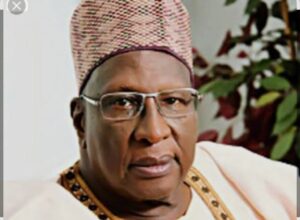
JUST IN: Former Third Republic Minister Of Industries, Alhaji Bamanga Tukur Dies At 90

Alhaji Bamanga Tukur  born 15 September 1935 passed on early hours today at 90. .

Until his death, he was a Nigerian businessman and politician who served as Minister for Industries in the administration of General Sani Abacha during the 1990s.

He began his public service career at the Nigerian Ports Authority, NPA, where he served as General Manager from 1975 to 1982.

He was one of the high-profile civil servants and military officers who acquired large areas of farmland along the various River Basin authorities. He was the life patron of ABR. He was president of the Africa Business Roundtable in 2012. From March 2012 to January 2014, Tukur was National Chairman of the People’s Democratic Party (PDP).

Although he attained a ripe age with just 3days before his 91st birthday, the circumstances surrounding his passing has not been disclosed by his families.

Why We Are Committed To Development Of Blue Economy – Oborevwori

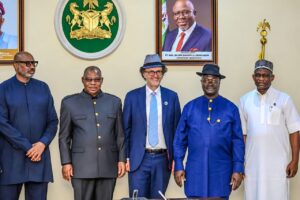
The Governor of Delta State, Rt. Hon. Sheriff Oborevwori, Thursday, said that his administration is committed to transforming the state’s maritime sector, expanding infrastructure, and deepening partnerships with international development agencies to drive sustainable economic growth.

Governor Oborevwori spoke when he received on courtesy call European Union delegation to Nigeria and ECO WAS led by Mr. Massimo De Luca.

According to the Governor who was represented by his Deputy, Sir Monday Onyeme, he was very happy with the assurance given by Mr Luca, that plans are in top gear for the development of Burutu Port as part of coastal corridor from Lagos through Burutu to Onitsha and Ajaokuta.

He said: “We have been talking about the blue economy since the beginning of this administration, and we are all very eager to participate in it and enjoy the enormous benefits that the blue economy has to offer.

“In particular, the proposed development of waterway and maritime transportation across the region presents a very exciting opportunity for Delta State.

“As a state with an extensive network of waterways, we are ready to provide all the necessary cooperation and support to enable this dream which is indeed our collective dream to become a reality.

“We have been talking about developing our blue economy and seaports for many years; to the best of my knowledge, this is the first time I am witnessing such a strong combination of serious-minded institutions and development partners coming together with a clear commitment to making this dream a reality.

“With the European Union, development partners, and all these important institutions standing together in support of this initiative, there is every reason to be optimistic.

“On behalf of the Government and people of Delta State, we sincerely appreciate you for your continued partnership and support.

“We have also heard about your willingness to work and cooperate with the state to improve the lives of persons living with disabilities, particularly by providing the necessary support and opportunities to enable them to live more independent and productive lives; this is a very important area, and we commend you for the initiative.

“On behalf of the Government of Delta State, I assure you that we will provide all the necessary support and cooperation required to bring this project to fruition.”

Earlier in his remarks, Mr Luca said; “the main focus of our visit to Delta State has indeed been the Blue Economy and related activities. Our presentation today will focus mainly on the Sea Link Project.

“As you probably know, the European Union has a long legacy of supporting development initiatives in Delta State.
Over the years, we have supported dozens of community projects across various local government areas, in fact, across all the local government areas of the state.

“These projects included water infrastructure, schools, health centres, civic centres, palm-oil processing facilities and other community-based investments.

“The Sea-Link Project is very important; for more than a decade, Nigeria and West Africa have had the development of coastal transportation along the West African coast high on the agenda.

In the case of Nigeria, an obvious extension of this concept is the development of a link between the major ports currently centred around Lagos and the Niger Delta, extending further up the River Niger.

“Under what we call the Global Gateway strategy, the general framework which, I believe, my Ambassador also discussed with the Governor during his visit a few months ago.

“The first transformative impact of this project is that it will help shift traffic from the roads to the rivers and coastal waterways; it will also create new business opportunities and stimulate economic activity.

“When you look at the geography of the project, we already have an existing Port that may require substantial rehabilitation, but it is strategically located in the Niger Delta. I am referring to the Port of Burutu.

“Burutu has excellent geographical conditions and significant competitive advantages in terms of accessibility and its potential to support maritime and inland, waterway transportation.

“The Sea Link, as it is currently envisaged, would establish a route from Lagos, through the coastal corridor to Burutu, and then up the River Niger through Onitsha and onward towards Ajaokuta.

“We are already putting together the various pieces of the financing structure because there is a consortium involving several parties that will participate in the project.

“The required investments will involve several components, including barges and port infrastructure, particularly infrastructure at Burutu.

“In the case of Burutu, we also see the potential for developing the port beyond simply being a stopover along the route to the River Niger.

“We believe Burutu has the potential to become a fully fledged international port; this gives the project a dual aspect.

“There is the potential to develop Burutu into a Port that is open to the ocean and international trade, similar in some respects to the Port of Antwerp-Bruges in Belgium.”

Oborevwori Calls For Synergy, Strong Collaboration Amongst Security Agencies, Others

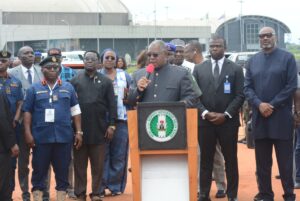
Delta State Governor, Rt. Hon. Sheriff Oborevwori, has called on security and emergency-response agencies across the country to sustain inter-agency collaboration, effective intelligence sharing, and rapid response to neutralize emerging security threats.

​The Governor made the call on Thursday in Asaba during the closing ceremony of the Rapid Response 3 Exercise, organized by the Office of the National Security Adviser (ONSA) through the Presidential Communication Command and Control Centre (PC4).

​Represented at the event by his Deputy, Sir Monday Onyeme, Ph.D., Governor Oborevwori described the choice of Asaba as a milestone, noting that Delta State is the first sub-national location outside the Federal Capital Territory, Abuja, to host the national assignment.

​According to him, national security is a collective responsibility requiring strong coordination among all security arms, traditional institutions, and citizens.

​”The security challenges confronting our nation today are complex and dynamic, requiring not only courage and professionalism, but also effective coordination, intelligence sharing, rapid response, strong inter-agency collaboration, and the support of all citizens; as such, it gives me great pleasure to be here today as we bring to a successful conclusion the Rapid Response 3 Exercise, organised by the Office of the National Security Adviser through the Presidential Communication Command and Control Centre (PC4) and hosted here in Asaba, Delta State.

“This is indeed another audacious initiative to rein-in insurgency, terrorism and other forms of criminality that have plagued our dear nation for so long.

“On behalf of the Government and good people of Delta State, I heartily congratulate all participants for the successful completion of this very important national assignment.

“It is particularly gratifying to note that Delta State was selected to host this exercise which is the first at the sub-national level outside Abuja; this is unprecedented and marks a positive shift in Crisis Response awareness and training.

“This exercise has once again demonstrated that national security is a collective responsibility.

“This understanding resonated in the theme and proceedings of the Delta Security Summit held on 17th June, 2026; II am convinced that this Rapid Response 3 Exercise has provided a solid platform for our security and emergency-response institutions to test their readiness, strengthen operational coordination and improve their capacity to respond swiftly and effectively to emerging threats.

“For us in Delta State, the exercise is particularly important because of our strategic position as a major economic, commercial and maritime hub playing host to sensitive national assets.

“The peace and security of our communities are essential not only to the wellbeing of our people but also to the economic stability and prosperity of Nigeria.

“We are deeply appreciative to the Office of the National Security Adviser for choosing Delta State, and particularly Asaba, the State Capital, as the venue for this important exercise.

“I wish to equally extend my commendation to all the participating security and emergency-management agencies for their dedication, discipline and professionalism evidently demonstrated throughout the exercise.

“It is also noteworthy to underscore that an exercise such as this should not end with the closing ceremony; the lessons learnt, skills acquired, the inter-agencies relationships established and the operational capabilities developed must be further sharpened, sustained beyond today and put to effective use.

“As a government, we will continue to support initiatives that promote peace, security and stability in Delta State; we will strengthen existing collaboration with the Federal Government, security agencies, traditional institutions, communities and other stakeholders.

“We recognize that no single institution can secure our communities alone and that Security is the collective responsibility of all and sundry.

“I urge all participants to return to your respective commands and institutions as ambassadors of the knowledge and experience gained. Let the spirit of cooperation, professionalism and rapid response demonstrated during this exercise become a permanent feature of our national security architecture.

“As we formally bring the Rapid Response 3 Exercise to a close, I am confident that the knowledge acquired, partnerships forged and lessons learnt will contribute significantly to our collective capacity to protect lives, property and critical national assets.

“Once again, I congratulate all participants on the successful completion of the exercise,” the Governor said.

The National Security Adviser, Mallam Nuhu Ribadu, represented by Rear Admiral Adedotun Ayo-Vaughon, Director PC4 Office of the National Security Adviser, thanked Governor Sheriff Oborevwori for his exceptional support and commitment to strengthening security architecture.

“Your Excellency, we deeply appreciate your gracious acceptance to host the Rapid Response 3 in Delta State, the first of its kind outside the Federal Capital Territory.

“This gesture is a testament to your administration’s unwavering commitment to the safety and security of the people of Delta State, as well as your continued partnership with the Federal Government in advancing national security,” Malam Ribadu said.

Demystifying Opposition Ahead Of 2027 Election – STRANGE BEDFELLOWS MERGER

Anthony Obire writes from Warri

The Obi-Kwankwaso alliance is failing now, not in some remote future. Now it is falling apart, in public, in real time, and the loudest protests are coming from the backers of the two men themselves.
Whatever new banner the merger flies under, it has already run into the wall every serious observer predicted it would. Obi’s “Obidient” movement has disowned it. Kwankwaso’s northern base has scorned it. The movement that was supposed to create the merged machine is now fighting over who gets to drive it, with factions already split over a director-general. The alliance is fighting over its nameplate before any campaign literature has been printed. That’s not coalition.” That is a committee that cannot agree on who has the gavel.
APC former party chairman, Abdullahi Ganduje, has not cared to be polite about it. His judgment that the 2027 NDC bid is dead on arrival is not only self-serving, it is testable. And the early signs are good for that position.
Think about what the rejections are actually saying. Obi’s base, urban, southern, and notoriously hostile to what they call “recycled politicians,” are being asked to coalesce with Kwankwaso, a figure their own movement spent 2023 describing in precisely those terms. Meanwhile, Kwankwaso’s supporters are being asked to subordinate a northern engine to a southern candidate. The two camps are not natural partners; they are natural rivals who have a brief shared enemy. And the common enemy they have, Tinubu, is exactly what keeps them in the same room and that is why the room keeps growing lean.
That is the real story of the alliance. It’s not being rejected because it’s too bold an idea. It is being rejected because the people that it pretends to command never wanted it in the first place. A coalition that can’t convince its own followers isn’t a coalition, it’s a negotiation between two disappointed men and the ghosts of their old bases.
The arithmetic is on Tinubu’s side. The opposition was divided in 2023, resulting in a plurality win. By 2026 the divided opposition, now openly feuding, is something worse: it has produced a coalition so tangled in its own internal rejections that it cannot hardly provide leadership within its ranks, a tangible ticket or a message. The incumbent’s best asset in 2027 isn’t the record itself. It is the spectacle of the alternative arguing with itself before the campaign has even started.
Let the strange bedfellows continue to meet. Their supporter’s continued refusal to play the merger game is a free advertisement for the incumbent’s case. Nigerians are not being asked to choose between Tinubu and a united opposition. They’re being shown day by day that the opposition cannot even unite with itself.
That is the debate that Tinubu walks into as the favorite. Not because his challengers are weak men, but because their alliance is a weak thing, spurned by its own base, jeered at by its foes, incapable of answering the only question that counts: if you cannot agree on who leads you, why should Nigeria agree to be led by you at all?

DOPF Felicitates Aniagwu on Birthday Anniversary, Extols His Media Friendliness

ASABA/Nigeria: The Delta Online Publishers Forum (DOPF) has felicitated the Delta State Commissioner for Works (Rural) and Public Information, Hon. Charles Aniagwu, on the occasion of his birthday, describing him as an articulate, knowledgeable, accessible and media-friendly public servant.

The felicitation was contained in a birthday congratulatory letter addressed to the Commissioner and signed by the Chairman and Secretary of the Forum, Emmanuel Enebeli, and Shedrack Onitsha, respectively.

In the letter, DOPF said Aniagwu had distinguished himself in public service through his commitment to the development of Delta State and his understanding of the strategic role of communication in governance. The Forum commended his ability to effectively communicate government policies and programmes, provide clarification on issues of public interest and engage stakeholders in ways that promote better understanding of the activities of government.

The Forum also praised Aniagwu for maintaining a cordial and mutually respectful relationship with the media, particularly online publishers in the state. It noted that his accessibility and willingness to engage journalists had helped promote constructive dialogue between government and the media, while also acknowledging his recognition of online journalism as an increasingly important platform for public enlightenment and development.

DOPF specifically expressed appreciation for the Commissioner’s relationship with the Forum, noting that his engagement with its members had contributed to an atmosphere of dialogue, mutual respect and constructive partnership between the online media community and the Delta State Government.

The Forum wished Aniagwu good health, greater wisdom, renewed strength and many more years of fruitful service to Delta State and humanity. It also prayed that God would continue to bless him and his family and grant him greater opportunities to contribute to the progress and development of the state.

Delta Chief Press Secretary Eulogizes Aniagwu On Birthday Anniversary, Describes Him As Transdisciplinary And An Impactful Journalist

The Chief Press Secretary to Delta State Governor, Sir Festus Ahon, has congratulated the Commissioner for Works (Rural Roads) and Public Information, Mr Charles Aniagwu, on his birth anniversary.

Ahon, in a statement to mark Aniagwu’s birth anniversary, described him as a versatile professional whose experience in journalism and public communication has continued to benefit governance in the state.

He said the commissioner had distinguished himself in journalism, business and public service, adding that his career had been defined by professionalism, versatility and commitment to duty.

He said Aniagwu’s background as a journalist had equipped him with the ability to analyse issues, engage different audiences and communicate government policies in ways that make them accessible to the public.

According to him, Aniagwu’s public speaking ability and deep understanding of current affairs had also contributed to his effectiveness as a government spokesman and political communicator.

Ahon said the commissioner had remained an important voice in the articulation and explanation of policies and programmes of the Governor Oborevwori’s administration, particularly at a time when effective communication had become critical to public understanding of government activities.

He said: “Aniagwu has built a career that cuts across journalism, business and public service, and in each of these areas, he has demonstrated competence and an understanding of the demands of the profession.

“His strength as a communicator is not only in his command of language, but also in his ability to engage issues from different perspectives and communicate them in a manner that ordinary people can understand.”

Ahon prayed God to grant Aniagwu more years in good health and fulfilment, while urging him to continue bringing his experience and knowledge to bear on the development of the state.

Next2None, NAPTIP Sign Pact On African’s First Intl Fashion Show To Fight Against Global Human Trafficking

Next2None Support Initiative, a non governmental organization and the National Agency for the Prohibition of Trafficking in Persons (NAPTIP) officially joined forces to unveil Africa’s first-ever international fashion for social impact mega-campaign, in a historic move to reshape the global fight against human trafficking

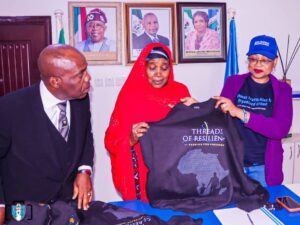
Tagged “Threads of Resilience: Fashion for Freedom,” the groundbreaking initiative strategically unites the worlds of global fashion, international cinema, and elite sports into a singular, powerhouse movement designed to prevent exploitation, empower youth, and restore survivor dignity.


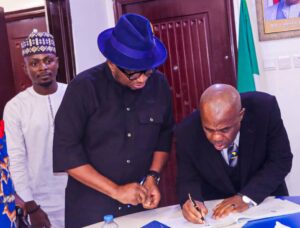
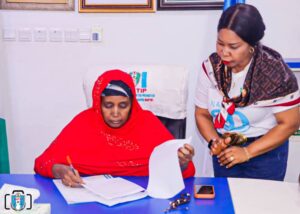
The partnership follows the formal signing of a landmark Memorandum of Understanding (MoU) between both organizations on August 27, 2026 by the DG of NAPTIP,  Binta Lami Adamu Bello,  Director of the Legal and Prosecution Department for NAPTIP, Mrs Ijeoma Amugo and Director-General of Next2None Support Initiative, Mr. Sam Obu Esq., (popularly known as Chucky), and Mr. Frank Nwala.

The collaborative masterplan was announced in a statement signed by the Director-General of Next2None Support Initiative, Mr. Sam Obu Esq., and Mr. Frank Nwala, on Sunday.

Spanning an ambitious eight-year operational timeline from 2026 to 2034, the initiative targets an initial annual reach of 6,000 young people across Nigeria, carefully scaling up to train approximately 1,000 participants across each of the nation’s six geopolitical zones.

The program will run year-round, culminating in a spectacular annual flagship Global Fashion for Freedom event hosted in the capital city of Abuja, with its highly anticipated global launch slated for Q2 2027.


Speaking on the critical need for this initiative, Obu noted that the architecture of human trafficking has drastically evolved, adding that today, predators exploit digital platforms, leveraging social media, deceptive employment advertisements, fraudulent migration schemes, and online relationships to trap the vulnerable.

“Human trafficking is no longer just a law enforcement challenge; it is a crisis of poverty, unemployment, and lack of opportunity.

“’Threads of Resilience’ addresses this by moving beyond mere rescue. We are creating a sustainable, Nigerian-led international movement that uses creativity, sports, and education to establish pathways to absolute freedom and economic dignity”, the statement noted.

The statement said that the comprehensive program is structurally built on three transformative pillars namely the Prevention (Stopping the Cycle) which is expected to utilizing the cultural touchpoints that young people engage with daily—including fashion campaigns, school programs, digital advocacy, and community outreach—to expose trafficking risks and promote online safety.

The statement said empowerment (Reducing Vulnerability) is another pillar of action to be adopted, providing physical and digital training across critical vocational fields (such as fashion design, textile production, leather making, and garment care) blended with modern digital and enterprise skills (including e-commerce, financial literacy, and branding) to slide youth directly into sustainable livelihoods.

It will also rebuild (Restoring Dignity) which is offering complete, confidential, and respectful reintegration ecosystems for trafficking survivors, internally displaced persons (IDPs), and returnees which will includes vocational rehabilitation, mentorship, and vital mental health and psychosocial support.

According to the statement, to build true international coloration, Threads of Resilience is actively opening frontiers to engage global icons and institutional frameworks.

The initiative will position fashion as a vehicle for human rights where emerging designers and survivors will showcase collections carrying messages of healing and freedom, with Next2None and NAPTIP seeking active engagements and collaborations with major global luxury fashion houses, including Gucci, Balenciaga, Versace, and Hugo Boss.

In partnership with Nollywood and international filmmakers, the project will roll out impactful anti-trafficking movies, documentaries, and awareness skits, alongside providing hands-on film production training for young people.

Recognizing the raw power of grassroots sports, the campaign is building on existing talent hunt frameworks to engage global sporting bodies, the statement reads, adding “Strategic partnerships are being pursued with FIFA for football initiatives, the International Handball Federation (IHF) for handball tournaments, and the National Basketball Association (NBA) to deploy elite athlete ambassadors and sports clinics to reach vulnerable youth”.

Backed by NAPTIP’s governmental leadership and technical expertise, including facilitating collaboration with relevant Nigerian government institutions, United Nations agencies, the project driven by Next2None’s award-winning implementation track record, has established a rigorous Monitoring, Evaluation, and Learning framework to track metrics such as employment rates, survivor rehabilitation success, and funds mobilized.

As the implementation roadmap swings into high gear with diplomatic outreach and stakeholder mobilization, the Media Office of Next2None Support Initiative extends a global call to action.

“We invite corporate organizations, international development grants, foundations, philanthropists, brand ambassadors, volunteers and foreign missions to join hands with us. Together, we can use creativity to educate, skills to empower, and partnerships to rebuild lives”, the statement reads.

.

Oborevwori Hails Owa Monarch At 67th Coronation Anniversary

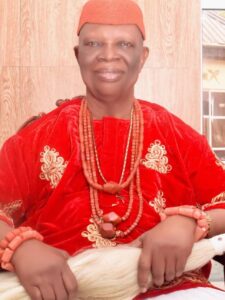
Delta State Governor, Rt. Hon. Sheriff Oborevwori, has felicitated with the Obi of Owa Kingdom, His Royal Majesty, Dr. Emmanuel Efeizomor II, OON, as he marks 67 years on the throne.

The Governor, in a goodwill message issued by his Chief Press Secretary, Sir Festus Ahon, described the Owa monarch as an accomplished traditional institution custodian whose long reign has remained synonymous with peace, stability and the advancement of his kingdom.

Oborevwori commended the monarch for his sustained commitment to the unity and progress of Owa Kingdom, as well as his invaluable contributions to the development of Delta State.

He particularly acknowledged the monarch’s role in promoting peaceful coexistence among communities and working constructively with successive governments to advance the collective interests of the people.

The Governor recalled the Obi’s tenure as Chairman of the Delta State Council of Traditional Rulers, noting that his wealth of experience, wisdom and counsel had contributed significantly to strengthening the relationship between traditional institutions and government.

He expressed appreciation for the monarch’s enduring service to his people and prayed that God would continue to preserve him in sound health, wisdom and strength for many more years.

“On behalf of the Government and people of Delta State, I warmly celebrate with our revered father, His Royal Majesty, Dr. Emmanuel Efeizomor II, OON, the Obi of Owa Kingdom, on the auspicious occasion of his 67th coronation anniversary.

“Your Majesty’s remarkable journey on the throne has been characterised by wisdom, peace, stability and an unwavering commitment to the welfare of your people.

“This milestone is a testament to your enduring service and exemplary leadership. I pray that God Almighty will continue to grant you good health, strength and many more years of purposeful reign,” the Governor said.

Oborevwori urged the people of Owa Kingdom to continue to honour and support the monarch, stressing the importance of preserving the kingdom’s rich cultural values while working collectively towards a prosperous future.

Oborevwori, Okowa, Guwor, Arenyeka, Others Bid Otumara Farewell

Governor Sheriff Oborevwori of Delta State, his wife, Deaconess Tobore Oborevwori, his predecessor, Senator Ifeanyi Okowa, Speaker of the Delta State House of Assembly, Rt. Hon. Emomotimi Guwor, and other dignitaries on Saturday paid their final respects to the late Dr. Joseph Sisanmi Otumara, as he was laid to rest in Warri.

Otumara, a renowned medical doctor, politician and administrator, died after a life of public service that saw him occupy several key positions in Delta State.

The funeral service, held at Yonwuren College, Ugbuwangue, Warri, was conducted by the Itsekiri Pastors Association, led by Bishop Mike Oyemiren.

Others who attended were; former First Lady of Delta State, Mrs. Roli Uduaghan; State Chairman of the APC, Chief Solomon Arenyeka; former Senator James Manager and other political leaders, friends, associates and members of the Otumara family.

The Warri Choral Society rendered songs and praises during the service, while Bible readings were taken from Ecclesiastes 8:1-9 and 2 Peter 3:3-14.

Otumara, who was born on December 16, 1960, until his death served as Chairman of the Itsekiri Politicians Forum and held the traditional title of Obarisuwa of Warri Kingdom.

He was a three-time Chairman of Warri South Local Government Council and a former Commissioner for Health in Delta State. He also served as Chairman of the Warri/Uvwie and Special Area Development Agency from 2019 until his death.

The officiating minister, Bishop Mike Oyemiren, urged Nigerians to live purposeful lives and leave behind legacies worthy of remembrance.

Preaching on “The Marketplace and Its Legacy,” Oyemiren likened life to a marketplace where everyone must eventually return home.

“Nobody visits the market and does not return home,” he said, describing the late Otumara as a man who completed his earthly race and left a legacy of service, leadership and positive impact.

He urged the congregation to fear God and live with eternity in view, asking: “When we die today, what will men say about us?”

Another officiating minister, Bishop Mike Laju, urged the people to use their time wisely, stressing that everyone has a limited tenure on earth.

Paying tribute to the deceased, Delta State Chairman of the All Progressives Congress (APC), Chief Solomon Arenyeka, described Otumara as a man who left “indelible footprints on the sands of time.”

Arenyeka described him as kind, meek, humble, pathfinder and God-fearing, adding that his contributions to society and the lives he touched would continue to be remembered.

He prayed God to console the Otumara family and grant the deceased eternal rest.

TRENDING

LATEST