By Abel Johngold
A fresh effort to revive the Abuja Branch of the University of Ibadan Alumni Association (UIAA) has begun with the inauguration of a five-man Interim Management Committee charged with the task of reuniting alumni in the Federal Capital Territory and restoring the branch to active participation in the affairs of the association worldwide.
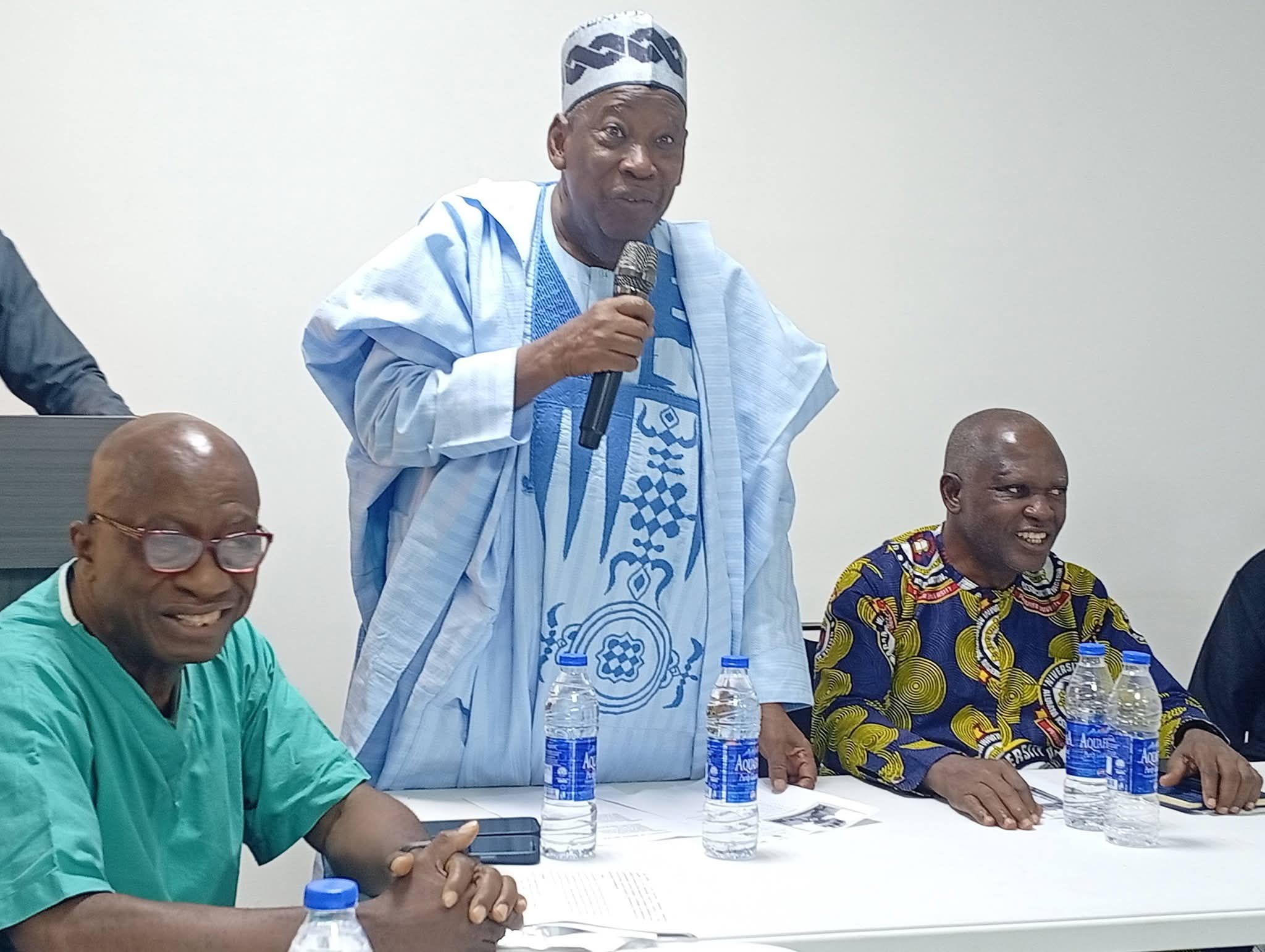
The committee was inaugurated on 31 October 2026 by the Acting President of UIAA Worldwide, Dr. Terrumun Hembaor Gajir, alongside members of the association’s Board of Trustees, including former Kano State Governor, His Excellency Dr Abdullahi Umar Ganduje, and Dr Onye Godfrey Achilihu.
Also present were two former Worldwide Presidents of the association, Dr Hyacinth Kyagbaa and Prof Kemi Emina, as well as the Worldwide Publicity Secretary, Comrade Abel Johngold.
The meeting, hosted by Dr Achilihu, a member of the UIAA Worldwide Board of Trustees, was held at Regal Boutique Hotels, Wuse Zone 2, Abuja, and brought together prominent University of Ibadan alumni from different professions and walks of life, including Ambassador Joe Keshi and Dr Emmanuel Sokpo, among others.
The inauguration represents a significant attempt to end a period of inactivity and leadership uncertainty that has left the Abuja Branch largely passive in the affairs of the wider alumni association.
The newly constituted Interim Management Committee comprises:
Barr. Emmanuel Okere — Chairman
Folagbade Agbaye — Vice Chairman
Emmanuel Oyekan — Secretary
Anthonette Onu — Member
Barr. Onyinyechi Onumajuru — Member
The committee was given a clear mandate: bring University of Ibadan alumni in Abuja together, rebuild the branch, reconnect it with UIAA Worldwide and conduct an election for a substantive leadership within the shortest possible time.
The assignment comes against the background of prolonged inactivity in the branch, particularly its failure to participate regularly in the association’s Worldwide Executive Council activities.
Inaugurating the committee, Dr Gajir said the decision was driven by a determination to restore the Abuja Branch to full participation in the life of the University of Ibadan alumni family.
“We are passionate about the revival of this branch and we are here today to inaugurate an interim management committee,” he said.
According to him, the immediate responsibility of the committee is to bring all UItes in Abuja together and create the foundation for a credible election.
He urged the committee to draw on the leadership training and values acquired at the University of Ibadan to rebuild the branch.
Gajir also expressed concern over the branch’s prolonged absence from UIAA Worldwide Executive Council Meetings, noting that active participation in the affairs of the Worldwide body is important to the political and organisational standing of individual branches.
He explained that the absence of the Abuja Branch from Executive Council activities had consequences for its ability to participate fully in the association’s wider leadership processes.
“The branch in the interim will try as much as possible to revive her membership with the Worldwide,” he said.
The Acting President said the Abuja Branch must work to restore its status within the Worldwide alumni community and become an active participant in association programmes.
He specifically urged the new committee to ensure that Abuja participates in the forthcoming Executive Council Meeting expected to take place in Rivers State.
“We want Abuja branch to be there,” he said.
Gajir described the Abuja Branch as being close to a moribund state before the intervention of Dr Achilihu and the renewed commitment of alumni to rebuild it.
He, however, said the situation could now change with the constitution of the interim committee.
“Now that you have resolved to be on board, we urge you to be actively involved in the affairs of UIAA. What we are doing here is what we feel is best for the branch for now,” he said.
The renewed push for reconciliation in Abuja also aligns with the broader direction of the current UIAA Worldwide leadership, which has placed reconciliation and the reunification of aggrieved branches and alumni at the centre of its agenda. The association’s newly inaugurated Board of Trustees has similarly emphasised unity and reconciliation as a priority.
The former Governor of Kano State and Vice Chairman of the UIAA Worldwide Board of Trustees, His Excellency, Dr Abdullahi Umar Ganduje, used the occasion to make an impassioned appeal for unity among Abuja UItes.
Ganduje warned against attempts by individuals or groups to dominate the branch, stressing that Abuja’s cosmopolitan character requires an inclusive approach to leadership.
“My appeal to those of you who are struggling to get this branch of UIAA up and going is that we are all equal,” he said.
He urged the alumni to abandon the idea that one person or group could single-handedly control the affairs of the branch.
“Don’t come with the impression that in Abuja you are the only one who matters. Abuja is a cosmopolitan town. You must take everybody on board,” he said.
Ganduje argued that the success of the branch would depend on collective ownership and participation rather than the personality of its chairman.
“If you have a situation where the chairman is one and once they execute all that everything will fail, so my opinion is that please let’s make Abuja Branch work this time around,” he said.
For Ganduje, the revival of the Abuja Branch is bigger than the immediate leadership contest. It is about rebuilding an alumni community capable of accommodating UI graduates regardless of their geographical, ethnic or religious backgrounds.
“I am from Kano State, but I have been around Abuja since 1981,” he said, recalling his years in public service as Chairman, commissioner, deputy governor and governor.
He disclosed that despite other engagements, he had made time to attend the meeting because of his belief in the project.
“Since I’m domiciled here, I will be joining you here. We can be building the chapter together,” he said.
“There is no tribe in nation building”
Ganduje’s intervention took a broader national dimension when he warned against the dangers of allowing ethnicity and religion to determine relationships within the alumni community.
“We should not let ethnicity or religion tear us apart,” he said.
He urged UItes to support whoever emerges through a legitimate process rather than insisting that leadership must come from their ethnic or religious group.
“As UItes, we must support anyone that emerges as a leader and not necessarily the person must be from our tribesman,” he said.
He recalled his own connection with the University of Ibadan, explaining that he commenced his PhD programme at the institution in 1989 and completed it in 1993.
Although a political scientist rather than a medical professional, he said he had maintained a deep connection with the university and its alumni community.
He also pointed to his involvement with the alumni association’s Board of Trustees as evidence of his continuing commitment to the institution.
“It is not about tribe or where you are from before we lift our Alma Mater,” Ganduje said.
“There is no tribe in nation building, so we must see ourselves as one. University of Ibadan Alumni community must be great.”
The Alake and Paramount Ruler of Egbaland, Oba Dr Adedotun Michael Aremu Gbadebo III, is Chairman of the UIAA Worldwide Board of Trustees, while Ganduje serves as Vice Chairman. The current Board has publicly placed reconciliation and unity among alumni and branches at the heart of its agenda.
For Dr Onye Godfrey Achilihu, the gathering represented more than an organisational meeting. It was a moment of renewed hope.
The UI alumnus and member of the Worldwide Board of Trustees, who hosted the meeting, recalled the strength of the bonds forged among his classmates at the University of Ibadan.
He said his medical school classmates of the 1981 set had remained connected despite living and working in different parts of the world.
“Shortly after I left for the United States, where I spent most of my professional life, we came back a couple of years ago, trying to build this Abuja branch of UIAA,” he said.
He acknowledged that efforts to rebuild the Abuja Branch subsequently encountered difficulties.
“Along the way we ran into a roadblock. And since then we’ve been trying to see how to navigate that obstacle,” he said.
But the turnout at the meeting, he said, had renewed his optimism.
“Seeing the people here gives me a lot of hope,” he said.
“It doesn’t take too many people to revive the branch” – Achilihu
Achilihu expressed confidence that the Abuja Branch could soon be restored to the level of activity it once enjoyed.
“When I returned to the U.S., we used to have a hosted meeting multiple times in a year. And I think I’m the one hosting this one here today,” he said.
The cardiologist also appealed to Abuja UItes to put aside differences and work collectively to rebuild the branch.
He recalled that students who met at the University of Ibadan after the Nigerian Civil War often came from different parts of the country, yet ethnicity was never allowed to define their relationships.
“Those of us who came to Ibadan after the civil war, nobody knew where anyone came from. It wasn’t mentioned; it wasn’t part of the conversation,” he said.
He pointed to the continuing friendship among his medical-school classmates as evidence that strong relationships can survive geographical, ethnic and religious differences.
“In my own medical school class, we have built hostels. Half of us come from the Eastern part of Nigeria, but nobody even talks about it,” he said.
His message to the Abuja alumni was unequivocal:
“Please, we want to revive this Abuja Branch of UIAA at all costs. It doesn’t take too many people to do that.”
He urged the new committee and other stakeholders to put their collective strength behind the effort.
“I want everybody to put their strength together so we can revive. I know we can do it,” he said.
Another major intervention came from veteran diplomat Ambassador Joe Keshi, who called for reconciliation between the different sides involved in the leadership difficulties that have affected the Abuja Branch.
Keshi urged stakeholders to deliberately embrace the language and spirit of reconciliation rather than allowing old disagreements to define the future of the branch.
His appeal was simple: the two sides should return to the table, reconcile and rebuild the Abuja branch as one family.
“Let’s come back as one group and solidify and rebuild the UIAA brotherhood Abuja branch,” he said.
He suggested that an announcement should be made to both sides as part of the reconciliation process, expressing confidence that the process could ultimately lead to the emergence of one united group.
The challenge before the five-man committee is therefore considerably larger than merely organising another election.
The committee must first rebuild trust.
It must reconnect alumni who have become disengaged, restore regular activities, strengthen the branch’s relationship with UIAA Worldwide and create an atmosphere in which members can once again see the Abuja Branch as a common home.
That task is particularly important because Abuja, as Nigeria’s federal capital, is home to UI alumni drawn from virtually every region and professional sector.
The meeting itself offered a glimpse of that diversity, with diplomats, medical professionals, lawyers, academics, public servants, administrators and other accomplished UItes gathering around a common objective.
For many of the speakers, that diversity should be regarded not as a source of division but as the branch’s greatest strength.
The proposed election, therefore, is only one part of the larger assignment.
The immediate priority is to create the conditions for an election that is broadly accepted, inclusive and capable of ending the leadership crisis rather than reproducing it.
The committee has been asked to bring the different constituencies together, rebuild membership and restore the branch’s participation in Worldwide activities.
If successful, the process could transform Abuja from one of UIAA’s inactive branches into one of its most vibrant.
The current UIAA Worldwide leadership has already declared reconciliation and reunification a major priority. In August 2026, the association inaugurated a new seven-member Board of Trustees chaired by the Alake of Egbaland, with Ganduje as Vice Chairman, and the Board has since emphasised the need to resolve divisions affecting branches and alumni across the country.
The Abuja intervention can therefore be seen as a practical test of that reconciliation agenda.
At the Regal Boutique Hotels in Wuse Zone 2, the immediate mood was one of cautious optimism.
There were memories of old friendships, acknowledgement of past disagreements and appeals for forgiveness and unity.
There was also a clear recognition that the Abuja Branch cannot regain its relevance through factionalism.
The message from the Worldwide leadership and the prominent alumni who attended the meeting was consistent: the branch belongs to every UIte in Abuja.
The five-man Interim Management Committee now has the responsibility of turning that message into action.
Its success will ultimately be measured not by the ceremony of its inauguration, but by whether it can bring the alumni together, restore confidence in the branch, reconnect Abuja with the Worldwide association and organise a credible election that produces a substantive leadership accepted by the wider UI community.
For a branch that has spent years struggling with inactivity and leadership disputes, the inauguration of the committee may well mark the beginning of a new chapter.
And for the Abuja UItes who gathered at Wuse Zone 2, the hope is that this time, the call to “come together as one” will move beyond speeches and become the foundation for a stronger, more united and more active Abuja Branch of the University of Ibadan Alumni Association.