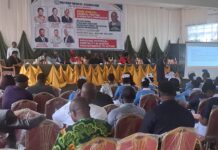

Medical experts have attributed the rising cases of erectile dysfunction and male infertility in Nigeria to the country’s worsening economic conditions, warning that prolonged financial hardship, psychological stress and unhealthy lifestyles are taking a heavy toll on the reproductive health of many men.
The experts expressed the concern during a live radio discussion on Trend FM, Asaba, organised by the Vito Corsica Deck of the National Association of Seadogs (NAS), Pyrates Confraternity, as part of activities marking its annual Feast of Barracuda (FoB) Lecture.
The lecture, themed “Breaking the Silence on Fertility: Understanding the Challenges, Exploring the Solutions, Restoring Hope,” focused on raising public awareness about infertility, challenging prevailing misconceptions and encouraging early medical intervention for affected couples.
The Vito Corsica Deck covers the Aniocha, Oshimili and Ika Federal Constituencies of Delta State.
Panelists included Consultant Obstetrician and Gynaecologist at the Federal Medical Centre (FMC), Asaba, Dr. Samuel Ilikannu; Consultant Family Physician and Head of the Department of Family Medicine at Asaba Specialist Hospital, Dr. Urenma Obodoagha; and Barr. Moses Agwere, who represented the National Association of Seadogs.
Explaining the rationale behind the annual lecture, Barr. Agwere, a Deputy Director in the Legal Drafting Department of the Delta State Ministry of Justice, said the Feast of Barracuda serves as a public enlightenment platform through which the association engages experts to address pressing national issues and stimulate informed public discourse.
According to him, the initiative reflects the association’s commitment to promoting social development through education and community engagement.
Speaking on infertility, Dr. Ilikannu said the condition remains one of the most misunderstood health challenges in Nigeria, largely because women are often blamed despite medical evidence showing that men contribute significantly to infertility cases.
“In our society, fertility is highly valued, making infertility a source of emotional, psychological and social trauma for many couples,” he said.
He explained that infertility is medically diagnosed when pregnancy fails to occur after one year of regular, unprotected sexual intercourse, or after six months where the female partner is aged 35 years or older.
The consultant advised couples to have regular unprotected sexual intercourse at least three times weekly before concluding that there is a fertility challenge.
“Only about 20 to 25 per cent of women conceive during a single menstrual cycle. Couples should therefore avoid unnecessary anxiety immediately after marriage because many pregnancies occur naturally within the first year,” he noted.
Dr. Ilikannu said recent studies indicate that male factors account for between 30 and 40 per cent of infertility cases, underscoring the need for both partners to undergo medical evaluation.
He also linked the growing incidence of erectile dysfunction among Nigerian men to the harsh economic realities confronting many households.
“Persistent financial pressure, unemployment, anxiety and depression are increasingly affecting men’s sexual performance,” he said.
The fertility expert further identified diabetes, hypertension, neurological disorders, excessive alcohol intake, recreational drug use and other chronic health conditions as major causes of erectile dysfunction, cautioning against self-medication and the indiscriminate use of sexual enhancement drugs.
Also speaking, Dr. Obodoagha stressed that infertility is a shared reproductive health challenge and should never be regarded as the woman’s responsibility alone.
She listed reproductive tract infections, hormonal disorders, complications arising from unsafe abortions, chronic illnesses and unhealthy lifestyle habits as some of the factors responsible for female infertility, while noting that some cases remain medically unexplained.
She urged newly married couples to avoid putting themselves under unnecessary pressure to have children immediately after marriage.
“Marriage should be enjoyed. Intimacy should not become a rigid timetable centred only on ovulation. Relax, support one another and seek professional medical advice when necessary,” she advised.
The experts unanimously advocated early diagnosis and treatment, noting that many fertility challenges can be successfully managed when couples present early at appropriate health facilities.
They identified counselling, treatment of underlying medical conditions, healthy nutrition, regular physical activity, fertility medications, vitamin supplementation and Assisted Reproductive Technologies (ART), including In-Vitro Fertilisation (IVF), as effective treatment options.
They added that surrogacy and adoption also remain viable alternatives for couples facing prolonged fertility challenges.
The discussion formed part of activities marking the National Association of Seadogs’ annual Feast of Barracuda, a flagship public enlightenment programme dedicated to promoting informed conversations on health, governance and other issues of national importance.