By Enitan Abel Johngold Orheruata, MNIPR
The Nigerian Medical Association (NMA), Delta State Branch, has raised the alarm over the growing menace of drug abuse in the state, warning that the unreported dangers of substance abuse are increasingly threatening the health and social wellbeing of residents, particularly youths.
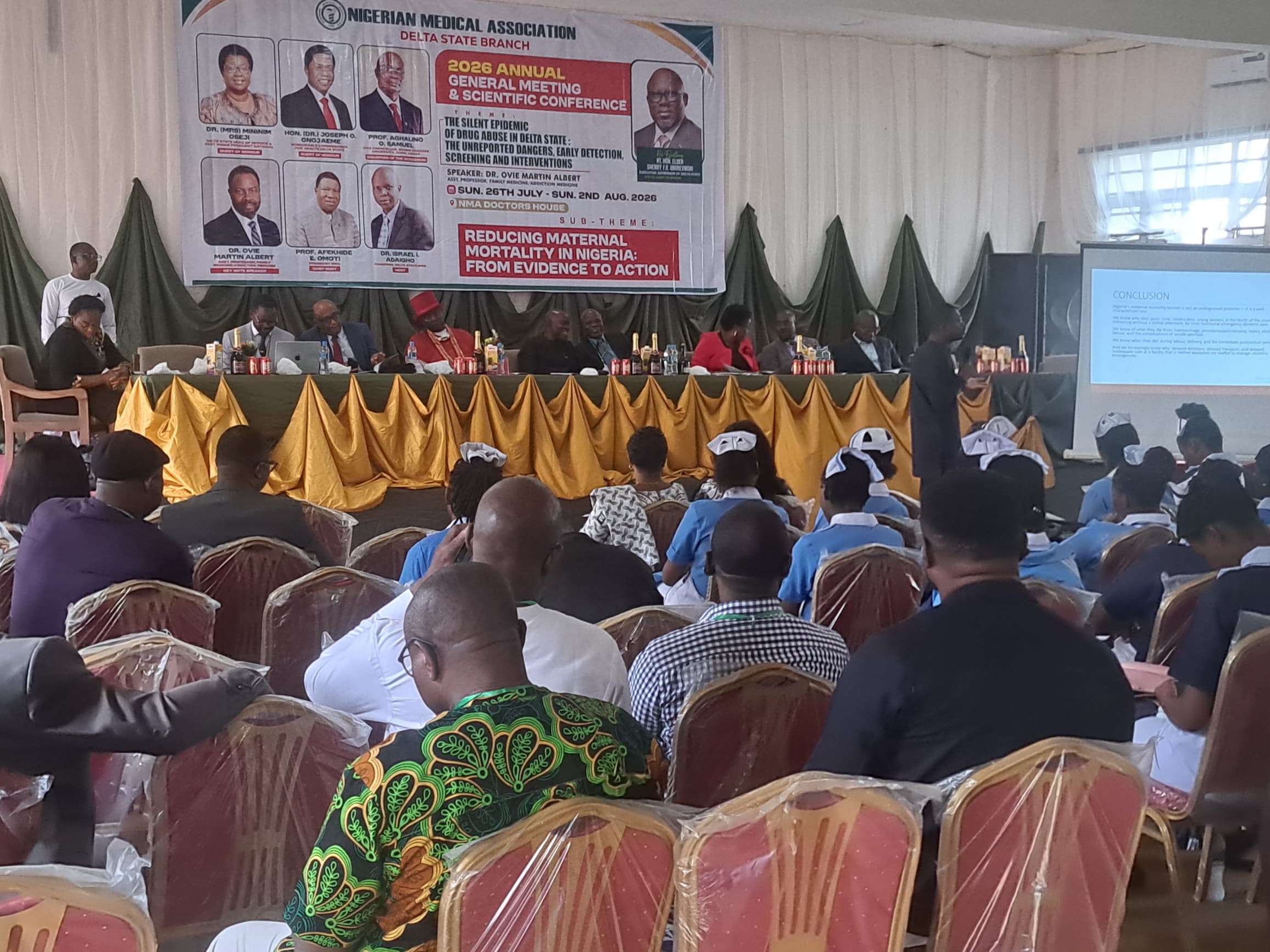
The association made the call at its 2026 Annual General Meeting and Scientific Conference held yesterday at the NMA Secretariat, Asaba, with the theme, “The Silent Epidemic of Drug Abuse in Delta State: The Unreported Dangers, Early Detection, Screening and Interventions.”
The scientific presentation on the theme was delivered by Dr. Ovie Martin Albert, Assistant Professor of Family Medicine and Addiction Medicine, who highlighted the need for greater awareness, early detection, screening and timely intervention in tackling substance abuse.
The conference also featured a sub-theme, “Reducing Maternal Mortality in Nigeria: From Evidence to Action,” delivered by Dr. Samuel Ilikannu.
Speaking at the event, the Chairman of the NMA, Delta State Branch, Dr. Israel Ighomaro Adaigho, said drug abuse had become a national epidemic requiring urgent and coordinated intervention from government, healthcare professionals, families and the wider society.
Adaigho, in his welcome address, noted that youths and communities had increasingly become affected by drug abuse, misuse, hazardous use, dependence and addiction.
According to him, open conversations about drug abuse are essential to preventing addiction, promoting early intervention and reducing its devastating health and social consequences.
He said: “Open communication about drug abuse shatters the stigma that prevents individuals from seeking help and allows us to address underlying root causes of drug abuse like trauma and peer pressure.”
The NMA chairman explained that the choice of the theme was aimed at raising awareness about the risks associated with substance abuse, promoting prevention, encouraging treatment and supporting mental health.
On maternal mortality, Adaigho said the sub-theme was designed to draw attention to the tragic loss of lives associated with pregnancy and childbirth, stressing that most pregnancy-related deaths were preventable.
He said discussions around maternal mortality would enable policymakers and healthcare stakeholders to identify and address systemic challenges and root causes, including bleeding, infections and inadequate emergency preparedness.
The NMA chairman, however, expressed concern over the increasing challenges confronting medical doctors and other healthcare professionals in the country, lamenting that caregivers were increasingly becoming undervalued, misunderstood and inadequately protected.
He warned that unless urgent steps were taken to improve the welfare, security and working conditions of medical personnel, Nigeria would continue to experience the consequences of the mass migration of skilled health workers, popularly described as the “Japa” syndrome.
According to him, the Federal Government and Delta State Government must urgently provide better incentives and improved working conditions to retain doctors and other critical healthcare workers.
“The medical doctor is faced with increasing and disturbing challenges,” he said, adding that “the caregivers are no longer valued, cared for and protected.”
He stressed that the NMA Annual General Meeting and Scientific Conference provided an opportunity for medical doctors and other critical healthcare workers to be heard, appreciated and valued.
Adaigho also appealed to the Delta State Government to urgently address the concerns of doctors and other healthcare professionals in order to motivate them to contribute effectively to improving the health indices of the state.
He specifically called for tax rebates for critical healthcare workers, similar to incentives provided to defence and security personnel, describing such a measure as a veritable means of motivating doctors and other essential health workers.
The NMA chairman commended the Delta State Commissioner for Health, Dr. Joseph Onojaeme, for bringing the welfare concerns of doctors to the attention of the state government.
He also commended Governor Sheriff Oborevwori for what he described as significant investments in the health sector under the MORE Agenda.
Adaigho particularly acknowledged the recent deployment of sophisticated diagnostic equipment, including CT and MRI scan machines, to major hospitals across the three senatorial districts of the state.
He said the development demonstrated the state government’s commitment to improving healthcare delivery and health outcomes for Deltans.
Meanwhile, the Delta State Head of Service, Dr. (Mrs.) Mininim Oseji, and the Commissioner for Health, Dr. Joseph Onojaeme, represented by the Permanent Secretary, Hospital Management Board, Dr. Paul Okubor, appreciated the NMA for organising the conference and wished participants fruitful deliberations.
The conference brought together medical practitioners and other healthcare stakeholders to deliberate on drug abuse, addiction, maternal mortality and broader challenges affecting healthcare delivery in Delta State and Nigeria.
The NMA urged stakeholders to translate the outcomes of the conference into practical interventions capable of strengthening healthcare delivery, protecting health workers and improving the wellbeing of citizens.