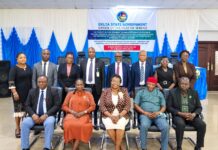
Delta State has commenced the compilation of its first State-Based Consumer Price Index (CPI), with the Commissioner for Economic Planning, Mr Sonny Ekedayen, describing the exercise as a major step towards strengthening the state’s statistical system and improving evidence-based economic planning.
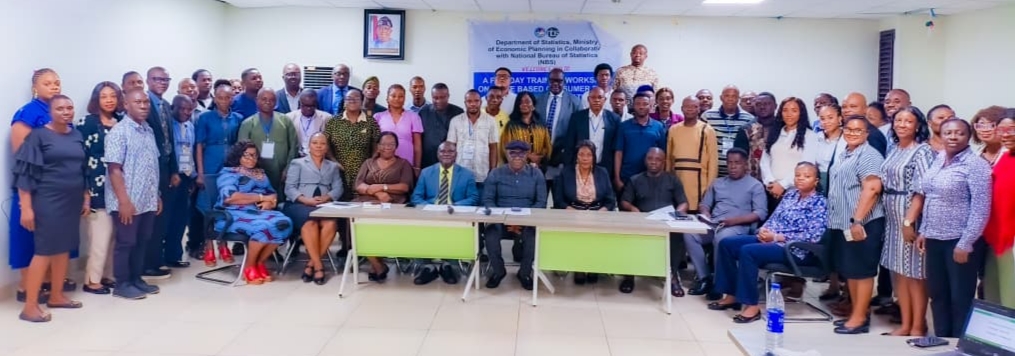
Ekedayen stated this on Tuesday while declaring open a five-day training workshop on the compilation of the Delta State 2026 Consumer Price Index, held at the Professor Chike Edozien Secretariat, Asaba.
The workshop, which runs from September 22 to 26, is being organised in collaboration with the National Bureau of Statistics (NBS), whose officials are facilitating the technical sessions.
The commissioner said the commencement of the state-based CPI compilation demonstrated Delta State’s commitment to building institutional capacity, strengthening its data systems and ensuring that statistics generated by the state met professional and internationally recognised standards.
He said the exercise was particularly important because reliable statistical information was essential to effective economic planning and policymaking.
According to him, the CPI should not be regarded merely as a statistical figure, but as a vital economic indicator that measures changes in the general price levels of goods and services consumed by households.
He said the data generated through the CPI would be useful in measuring and monitoring inflation, informing monetary and fiscal policy decisions, adjusting wages and pensions, analysing poverty and welfare, as well as strengthening national and sub-national planning and budgeting.
“Without accurate CPI data, our planning would be built on weak foundations,” Ekedayen said.
The commissioner urged the participants to approach the exercise with professionalism, accuracy and a strong sense of responsibility, stressing that the quality of the state’s economic decisions would depend largely on the quality of the data generated.
He said the training was designed to refresh and deepen participants’ understanding of CPI concepts and methodology, strengthen their data collection, processing and analytical skills, and equip them to address emerging challenges in price statistics.
Ekedayen also said the exercise would enable Delta to align its price statistics with international best practices and standards promoted by organisations including the International Labour Organisation (ILO), International Monetary Fund (IMF) and the United Nations.
The commissioner, who noted that the training came shortly after the validation exercise for the Delta State Statistical Year Book, said the two initiatives underscored the ministry’s commitment to developing a stronger and more reliable statistical architecture for the state.
He commended the National Bureau of Statistics for its technical support and the facilitators for contributing to the capacity-building initiative.
Among the NBS officials facilitating the workshop are Dr Emmanuel Abbah, Dr Calistius Ihemebiri and Mrs Bukola Babalola.
Ekedayen said the ongoing CPI exercise was particularly significant against the backdrop of prevailing concerns over inflation and the rising cost of living.
He noted that the current inflationary trend appeared to be moderating, adding that the development indicated the importance of sustained policy interventions aimed at improving economic conditions and the welfare of Nigerians.
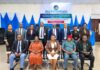
The commissioner was accompanied at the event by the Permanent Secretary in the Ministry of Economic Planning, Mr Augustine Itawansa; the State Director of Statistics, Mrs Nkechi Maduemezia; directors and other senior officials of the ministry.
During the technical sessions, participants were taken through key aspects of CPI compilation, including conceptual issues and methodology, data collection processes, the Delta State expenditure CPI basket, questionnaire review and the use of the Kobo Collect application.
Other areas covered included calculation methodologies, the gathering of consumption-pattern data, derivation of item weights for Delta State and the appropriate treatment of missing items.
The participants, comprising statisticians and enumerators, also engaged the facilitators through questions and discussions, while sharing practical experiences and challenges in preparation for the commencement of field data collection.
The commissioner charged the participants to recognise their role as critical actors in the state’s statistical system, urging them to ensure that data collected during the exercise was accurate, consistent and professionally handled.
He expressed confidence that the training would contribute significantly to the successful compilation of Delta State’s first CPI and ultimately provide policymakers with more reliable data for economic planning and decision-making.